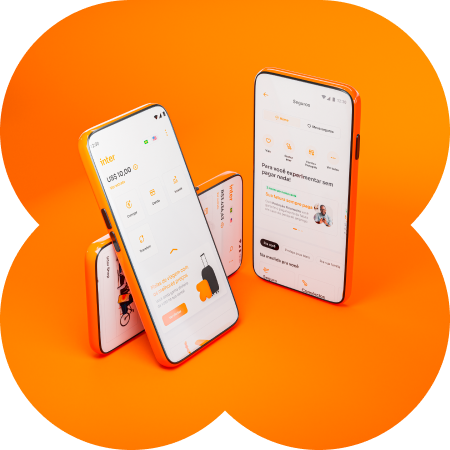
In Latin America’s financial industry, one important reason for the rapid growth of digital banks is that traditional banks have long had problems such as high fees, limited service efficiency, and insufficient financial coverage. As a result, more fintech platforms are beginning to reshape user financial behavior through mobile banking, digital payments, and super app models.
From an industry structure perspective, Inter represents more than a digital bank. It reflects a “platform based fintech company” model. As payments, e-commerce, and AI financial services gradually converge, competition among digital banks is also shifting from competition over financial products alone toward competition across comprehensive digital ecosystems.
The profit model of digital banks has similarities with traditional banks, but there are also clear differences. Traditional banks have long relied on interest spreads between deposits and loans as their core source of income. Digital banks also operate financial businesses, but they place greater importance on platform ecosystems and user scale.
For CIB, the bank account itself is often not the most important source of profit. Many digital banks use low fee or even free accounts to attract users into the ecosystem, then further expand into credit cards, consumer loans, payment services, and wealth management.
This model is, in essence, closer to the logic of an internet platform. The platform first builds user traffic, then increases the value of each user through diversified financial services. As a result, user scale and user activity usually have a direct impact on the long-term profitability of digital banks.
From an industry trend perspective, digital banks are becoming more like “financial platforms,” rather than just banks in the traditional sense.

Source: inter.co
Inter’s revenue sources mainly include consumer finance, credit card business, payment services, lending systems, and wealth management. At the same time, its super app ecosystem has further expanded into insurance, e-commerce, and investment services.
Consumer finance is one of the important revenue sources for digital banks. Latin America has long had demand for higher credit card penetration and consumer finance growth, and digital banks can use mobile platforms to acquire users more quickly.
At the same time, payment systems have also become an important area of competition for digital banks. As Brazil’s Pix instant payment system has rapidly gained adoption, users have become increasingly accustomed to completing transfers and purchases through mobile apps, allowing Inter to continue improving platform activity.
From an industry structure perspective, what truly matters for digital banks is not a single financial product, but whether they can build a long-term user financial ecosystem.
| Revenue Source | Core Logic |
|---|---|
| Consumer finance | Credit and installment services |
| Credit card business | User spending ecosystem |
| Payment services | Digital payments and transfers |
| Wealth management | Investment and financial management services |
| E-commerce ecosystem | Integration of finance and consumption |
Super App is one of the important directions in today’s Latin American fintech industry. Its core logic is to integrate multiple high-frequency services into one platform, allowing users to complete finance, payments, shopping, and investment activities within a single app.
For Inter, the goal is not just to provide digital bank accounts, but to build a complete digital lifestyle ecosystem. When users stay on the same platform over the long term, the platform can not only increase the usage rate of financial services, but also accumulate more user behavior data.
One important difference between this model and traditional banking is that the platform places greater emphasis on “ecosystem synergy.” For example, after completing a payment in the app, users may go on to use consumer loans, credit cards, or investment services, and these different businesses can then support cross-selling.
From an industry perspective, super apps have become an important competitive moat for digital banks, because future competition among financial platforms may depend on who can build the more complete user ecosystem.
One very important direction in Inter’s business model is the combination of financial services and the e-commerce ecosystem. For digital banks, relying only on financial products usually makes it difficult to increase user activity over the long term, so more platforms are expanding into consumer scenarios.
The importance of an e-commerce ecosystem lies in its ability to increase daily user frequency. When users not only manage funds through the platform, but also shop and spend inside it, financial services can become more naturally embedded in user behavior.
At the same time, combining finance with e-commerce can also improve data analysis capabilities. User consumption behavior, payment habits, and purchase frequency can all help the platform optimize risk control and product recommendations.
From an industry trend perspective, many digital banking platforms may gradually evolve toward a comprehensive “finance + consumption + payments” ecosystem in the future, and Inter is one important example of this model.
Consumer finance is one of the core parts of the digital banking business model. Compared with large traditional banks that rely mainly on corporate lending, many digital banks focus more on individual users and small consumer scenarios.
For Inter, credit cards, personal loans, and installment services are all important revenue sources. Digital banks can usually use mobile platforms and data analysis systems to complete user risk assessments more quickly.
At the same time, Latin America has long had demand for financial inclusion. Some users previously found it difficult to access traditional banking services, while digital banks can expand financial coverage through mobile finance.
However, consumer finance also brings risk control challenges. When the economic environment worsens or interest rates rise, loan default risk usually increases as well. For this reason, AI risk control and data systems are becoming increasingly important for digital banks.
User retention is one of the most important metrics for digital banks. Compared with traditional banks, which rely on long-term account relationships, internet finance platforms usually need to continuously improve user activity.
For Inter, if users only open an account for a short period but do not use payment, lending, or investment services over the long term, the platform’s profitability is usually limited. Therefore, one of the important goals of the super app ecosystem is to increase how long users stay on the platform.
At the same time, competition costs among financial platforms are also rising. As more digital banks enter the market, user acquisition costs continue to increase, making user retention a key factor in long-term platform competition.
From an industry structure perspective, digital banks are becoming increasingly similar to internet platforms, rather than traditional financial institutions alone.
One of the biggest differences between digital banks and traditional banks lies in their operating structures. Traditional banks have long relied on large networks of physical branches and offline service systems, while digital banks depend more on online platforms and automated systems.
For Inter, the mobile banking model can help the platform reduce certain offline operating costs. This means the platform can serve more users at a lower cost.
At the same time, digital systems can also improve operating efficiency. For example, AI risk control, automated approvals, and digital customer service can all reduce certain labor service costs.
However, digital banking does not mean “zero cost.” In fact, as market competition intensifies, spending on user acquisition, technology development, and data security is also continuing to rise. As a result, competition among digital banks has essentially become competition in “technological capability and ecosystem operating capability.”
The rapid growth of Latin America’s fintech industry is closely related to the region’s financial structure and the development of mobile internet. For a long time, financial service coverage was insufficient in parts of Latin America, while the spread of smartphones allowed mobile finance to expand quickly.
At the same time, younger users are increasingly used to digital payments and online financial services, which has further driven the growth of digital banks. The adoption of the Pix instant payment system has also rapidly matured Brazil’s digital payment ecosystem.
For platforms like Inter, growth logic does not come only from banking itself, but from the expansion of the entire digital ecosystem. When users begin completing payments, consumption, investing, and financial management on the platform, the platform gradually forms stronger network effects.
Looking at the long-term trend, Latin America’s fintech industry may continue developing toward a comprehensive ecosystem of “digital banking + payments + e-commerce + AI finance,” and the super app model represented by Inter is an important part of this industry shift.
CIB’s (Grupo Cibest) business model is essentially a combination of “digital banking + super app + financial ecosystem platform.” Compared with traditional banks that rely on a single deposit and lending business, Inter places greater emphasis on user retention, payment ecosystems, and platform based financial services.
At the same time, its integrated “finance + e-commerce + payments” model also reflects an important development trend in Latin America’s digital finance industry. Future competition among digital banks may no longer be limited to financial products alone, but may instead center on user ecosystems and digital platform capabilities.
CIB is the stock ticker of Brazilian digital banking group Inter&Co (Grupo Cibest).
A Super App is an integrated application that brings together services such as payments, banking, e-commerce, and investments on one platform.
Because digital banks need long-term user activity to improve overall platform profitability.
Digital banks rely more on mobile platforms, automated systems, and digital user operations.
Pix has helped popularize instant payments in Brazil and accelerated the growth of digital finance.