ADI is the core utility token of the network described in the ADI Chain overview, directly tied to the zkRollup execution layer, L3 compliance domains, and institutional settlement use cases. Understanding ADI means treating it as three linked functions: network operating fuel, ecosystem value-transfer medium, and long-term incentive instrument.
ADI Chain targets governments, banks, and enterprises with a Custom Gas Token model: users and developers pay Gas in ADI when interacting on the L2 and associated L3 domains, without managing ETH separately. On-chain settlement among enterprises, developers, validators, and end users also uses ADI as the common unit of account.
On tokenomics, ADI has a genesis total supply of 999,999,999 tokens—a fixed cap with no inflationary minting. Gas consumption, staking rewards, and ecosystem incentives all operate within this fixed pool. The sections below cover utility, allocation, unlock rules, staking, Gas binding, and structural limitations.
What Are the Core Uses of ADI?
ADI performs three roles in the ADI Chain ecosystem, each tied to actual network operation.
Native Gas and on-chain operations. All smart contract calls, transfers, and dApp interactions on ADI Chain (L2) and associated L3 domains are paid in ADI. The network uses zkStack Custom Gas Token capability so L3 institutional chains also consume ADI; L3 compliant chains explains L3 batch submission and L2 settlement paths in more detail.
Ecosystem settlement medium. ADI connects enterprises, developers, validators, and end users as the on-chain clearing unit for cross-border institutional settlement, RWA channel fees, and related scenarios.
Staking and long-term incentives. Holders can deposit ADI into treasury-backed staking pools for rewards. The model does not rely on inflationary minting; rewards are tied to treasury reserves.
| Function |
Who it serves |
Mechanism |
| Native Gas |
All L2 and L3 on-chain activity |
Custom Gas Token; ADI replaces ETH |
| Settlement medium |
Enterprises, developers, users |
Common unit for ecosystem value flow |
| Staking incentives |
Long-term participants |
Treasury-backed pools; no inflationary minting |
The three functions reinforce one another: Gas binds network operation, settlement binds ecosystem collaboration, and staking binds long-term participation.
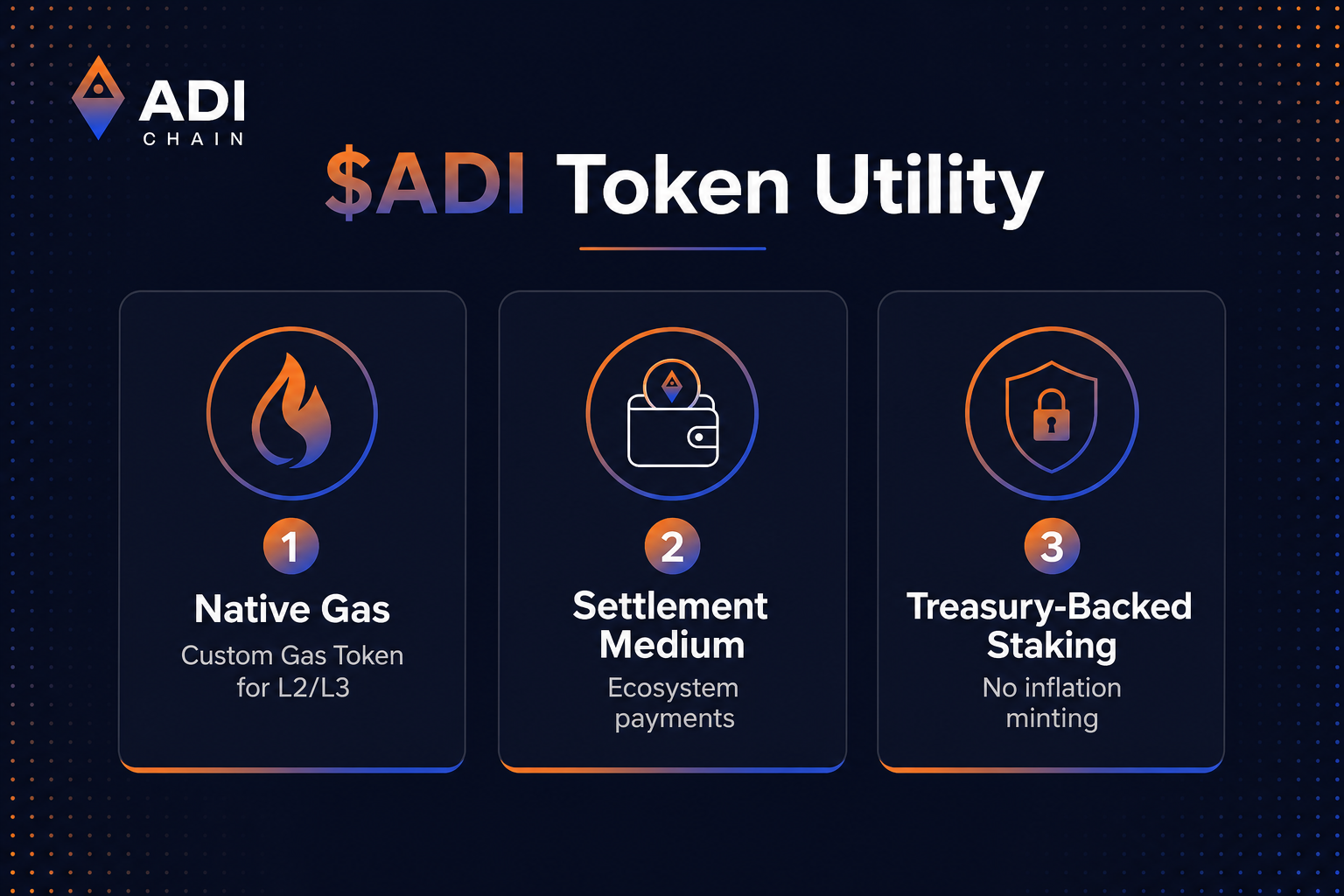 Figure 1. How ADI splits across Gas payment, ecosystem settlement, and treasury-backed staking.
How Is the ADI Token Allocated?
ADI has a genesis total supply of 999,999,999 tokens, fully allocated across seven categories with no reserved inflation channel.
The community fund receives 35%, vesting linearly over 72 months, with 1.39% circulating at TGE. Treasury reserves receive 25%, vesting over 108 months, with 5% circulating at TGE, funding staking rewards and strategic reserves. Private sale investors receive 12%, partners 10%, and the team 10%—each vesting over 72 months with a 12-month cliff. The token incentive pool receives 4% and liquidity 4%, both 100% circulating at TGE. The L1 contract address is 0x8b1484d57abbe239bb280661377363b03c89caea; after bridging to L2, ADI serves as native Gas.
| Allocation |
Share |
Vesting period |
Cliff / TGE release |
| Community fund |
35% |
72 months |
No cliff; TGE 1.39% |
| Treasury reserves |
25% |
108 months |
No cliff; TGE 5% |
| Private sale investors |
12% |
72 months |
12-month cliff |
| Partners |
10% |
72 months |
12-month cliff |
| Team |
10% |
72 months |
12-month cliff |
| Token incentive pool |
4% |
Immediately available |
TGE 100% |
| Liquidity |
4% |
Immediately available |
TGE 100% |
Community and treasury together account for 60%, reflecting ecosystem and long-term operations priority. Private sale, partners, and team total 32%, each cliff-delayed to stagger large releases. The incentive pool and liquidity (8%) support early launch.
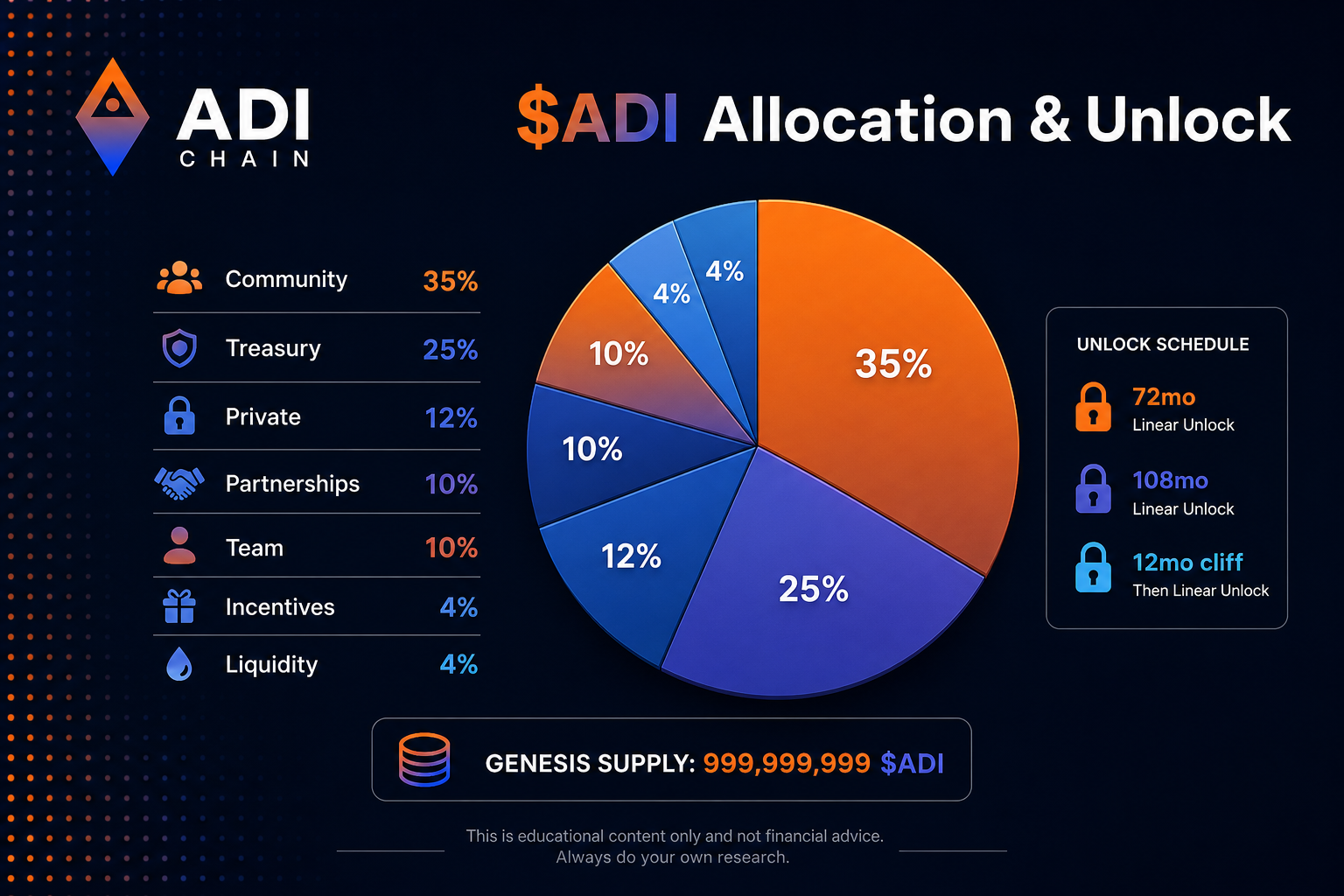 Figure 2. Seven-way ADI allocation shares with matching vesting periods and cliff rules.
How Do Unlock and Cliff Rules Work?
ADI circulation follows a combination of linear vesting, cliff lockups, and TGE initial releases.
The community fund (72 months), treasury reserves (108 months), and private sale, partners, and team (each 72 months) unlock linearly on a monthly basis; during the first year, releases typically occur on the 9th of each month. Private sale, partners, and team carry a 12-month cliff: zero release during the cliff period, then linear vesting over 72 months after the cliff ends. TGE immediate release applies to the incentive pool and liquidity (100%), plus initial shares for the community (1.39%) and treasury (5%).
When reading the unlock structure, distinguish allocated supply from freely circulating supply: large portions remain outside free circulation during cliff or linear vesting periods. This describes structural supply-side pacing only and does not constitute any investment judgment.
How Does ADI Staking Work?
ADI staking runs through treasury-backed reward pools. The defining feature is that rewards come from existing treasury holdings, not inflationary minting.
Holders deposit ADI into staking pools and receive rewards per pool rules; funding comes from treasury reserves (25% allocation, 108-month vesting). The fixed supply cap and no-inflation design anchor staking incentives within the same long-term framework. Staking complements Gas consumption: Gas fees enter the network economic loop, while staking rewards flow from treasury reserves, forming a two-way circulation path for the fixed token supply.
Staking reward rates, pool capacity, and eligibility may adjust as the ecosystem matures; specific parameters follow on-chain contracts and public disclosures. Staking does not remove underlying risks from smart contracts, treasury management, or liquidity.
How Is ADI Bound to Gas Payment and Ecosystem Incentives?
ADI network utility couples to ADI Chain operations through Gas consumption and ecosystem incentives.
Gas binding. Every L2 and L3 operation consumes ADI; demand rises with transaction volume and L3 deployment count. Unlike general L2s that pay Gas in ETH—as covered in ADI Chain vs Arbitrum and Base—ADI Chain unifies Gas with its native token, reducing multi-asset operational overhead for institutions.
Ecosystem incentive binding. The token incentive pool (4%, fully circulating at TGE) supports short-term cold start. The community fund (35%) backs long-term developer and community building. Treasury reserves (25%) fund staking and strategic operations, with 108-month vesting aligned to the network's long-term cycle.
| Binding dimension |
Gas payment |
Ecosystem incentives |
| Trigger |
Every on-chain operation |
Ecosystem activity, developer growth, staking participation |
| Funding source |
User-paid consumption |
Incentive pool, community fund, treasury reserves |
| Supply effect |
Consumption enters network loop |
Release from allocation pools per unlock rules |
L3 institutional chains consume ADI as Gas and may also use it as a settlement unit in business flows, extending token utility from L2 into institution-specific domains.
What Are the Structural Limitations of ADI Tokenomics?
ADI tokenomics emphasizes fixed supply and Gas binding, yet several structural factors warrant objective awareness.
Circulation pacing from long-term unlocks. Private sale, team, and partners total 32% with a 12-month cliff followed by 72-month linear vesting. The community (35%) and treasury (25%) release gradually over 72–108 months, creating structural supply-side variables.
Treasury dependence and staking sustainability. Staking rewards come from treasury reserves rather than new issuance, but payout pacing and participation scale may affect long-term appeal. If Gas consumption and ecosystem adoption fall short of design assumptions, network economic activity may also run below expected levels.
Custom Gas Token trade-offs. Replacing ETH with ADI lowers institutional operational barriers, but participants must hold ADI to interact—adding asset preparation steps in cross-border or multi-chain scenarios.
Indirect dependence on L3 expansion. L3 deployment progress and institutional adoption carry uncertainty; early L3 activity density may remain limited. Smart contracts, L1 bridging, and staking pools also require ongoing audit and operational security attention.
Summary
ADI serves as native Gas, settlement medium, and treasury-backed staking in the ADI Chain ecosystem, with a genesis total supply of 999,999,999 and no inflationary minting. Seven allocation categories follow distinct vesting periods and cliff rules; during the first year, unlocks typically occur on the 9th of each month. Gas consumption binds network operation; ecosystem incentives are supported by the incentive pool, community fund, and treasury. Understanding ADI means placing it within ADI Chain's institutional L2 and L3 compliance framework and tracking the dynamic relationship among adoption, unlock pacing, and mechanism constraints.
FAQ
What is ADI used for?
ADI pays Gas on ADI Chain (L2) and associated L3 domains, serves as the ecosystem settlement medium, and can be deposited in treasury-backed staking pools for rewards. The L2 uses a Custom Gas Token model, so on-chain interaction requires ADI as input without separately holding ETH for L2 Gas.
How is the ADI token allocated?
The genesis total supply is 999,999,999 tokens across seven categories: community fund 35% (72 months), treasury reserves 25% (108 months), private sale 12%, partners 10%, team 10% (the last three each vest over 72 months with a 12-month cliff), token incentive pool 4%, and liquidity 4% (both 100% circulating at TGE). The L1 contract address is 0x8b1484d57abbe239bb280661377363b03c89caea.
What are ADI unlock and cliff rules?
Private sale, partners, and team each have a 12-month cliff, then linear vesting over 72 months after the cliff ends. The community fund vests linearly over 72 months (1.39% released at TGE); treasury reserves over 108 months (5% at TGE). During the first year, unlocks typically occur on the 9th of each month. The incentive pool and liquidity are fully circulating at TGE.
How does ADI staking work, and where do rewards come from?
Holders deposit ADI into treasury-backed staking pools to earn rewards. Rewards come from treasury reserve allocations; the protocol does not mint new tokens through inflation. The fixed supply cap is 999,999,999 tokens, designed to provide sustainable incentives for long-term participants without increasing total supply.
Is ADI Chain a public chain or a Layer 2?
ADI Chain is a Layer 2 (L2) zkRollup on Ethereum, not a standalone L1 public chain. Transactions execute on L2; state is finalized on Ethereum mainnet through zero-knowledge proofs. Institutions can also deploy L3 compliance chains on top of the L2 that settle to L2. ADI is the native Gas token for that L2 and associated L3 domains.
Is ADI Chain secure, and what should ADI holders watch?
ADI Chain uses ZK validity proofs, so invalid state cannot be accepted on L1; its security model inherits Ethereum economic security. Beyond L2/L1 security, ADI holders should understand circulation pacing from long-term unlocks, treasury staking sustainability, bridging and smart contract risks, and asset preparation requirements under the Custom Gas Token model. These are mechanism descriptions only and do not constitute investment judgment.







